bringing the outside in
What is biophilic design? Essentially, it is design that purposefully connects the natural world with the built world. It is design that prioritizes incorporating nature into the design concept.
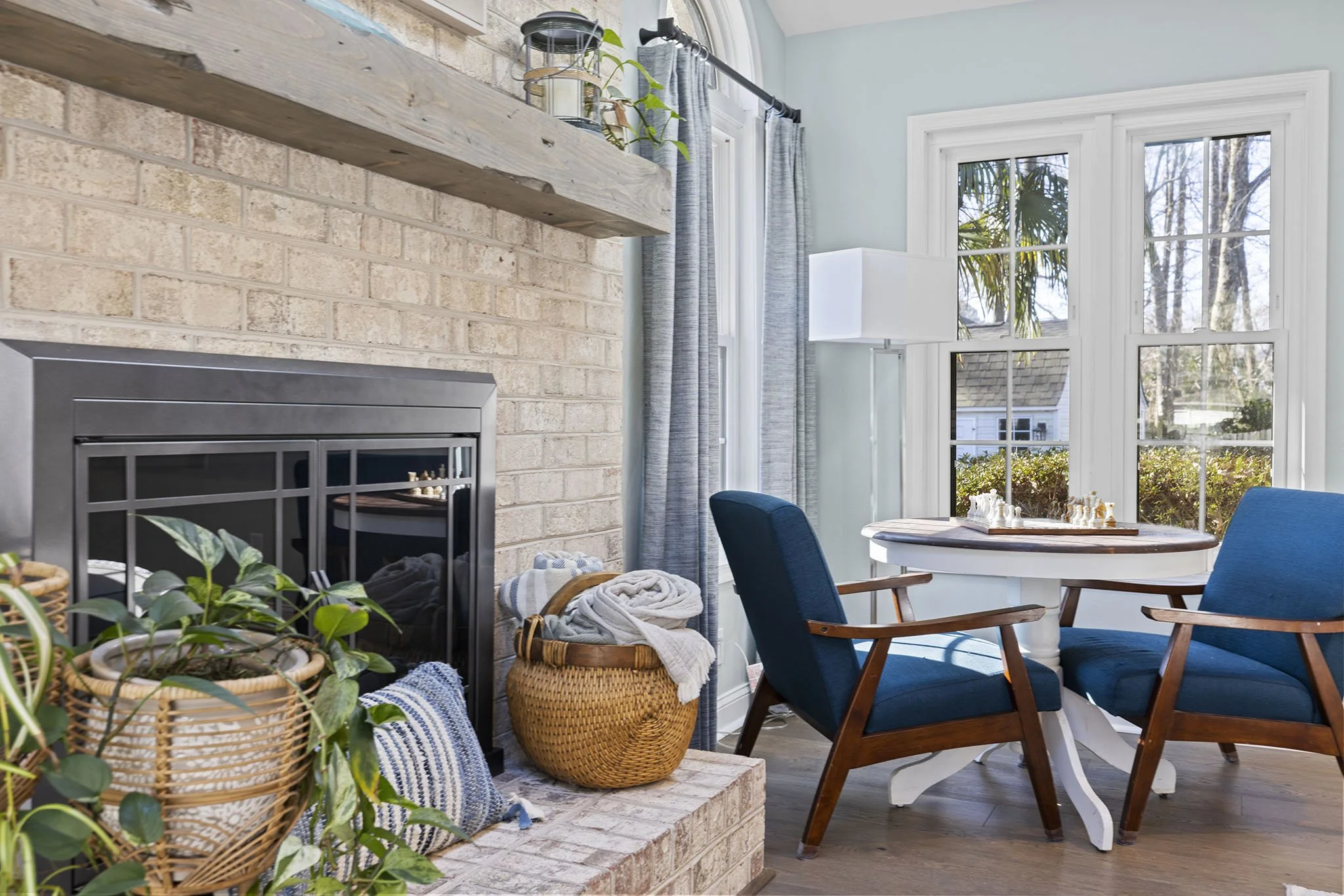
Greenery, woven baskets, natural fabrics, wood elements, and multiple windows to let in light and fresh air.
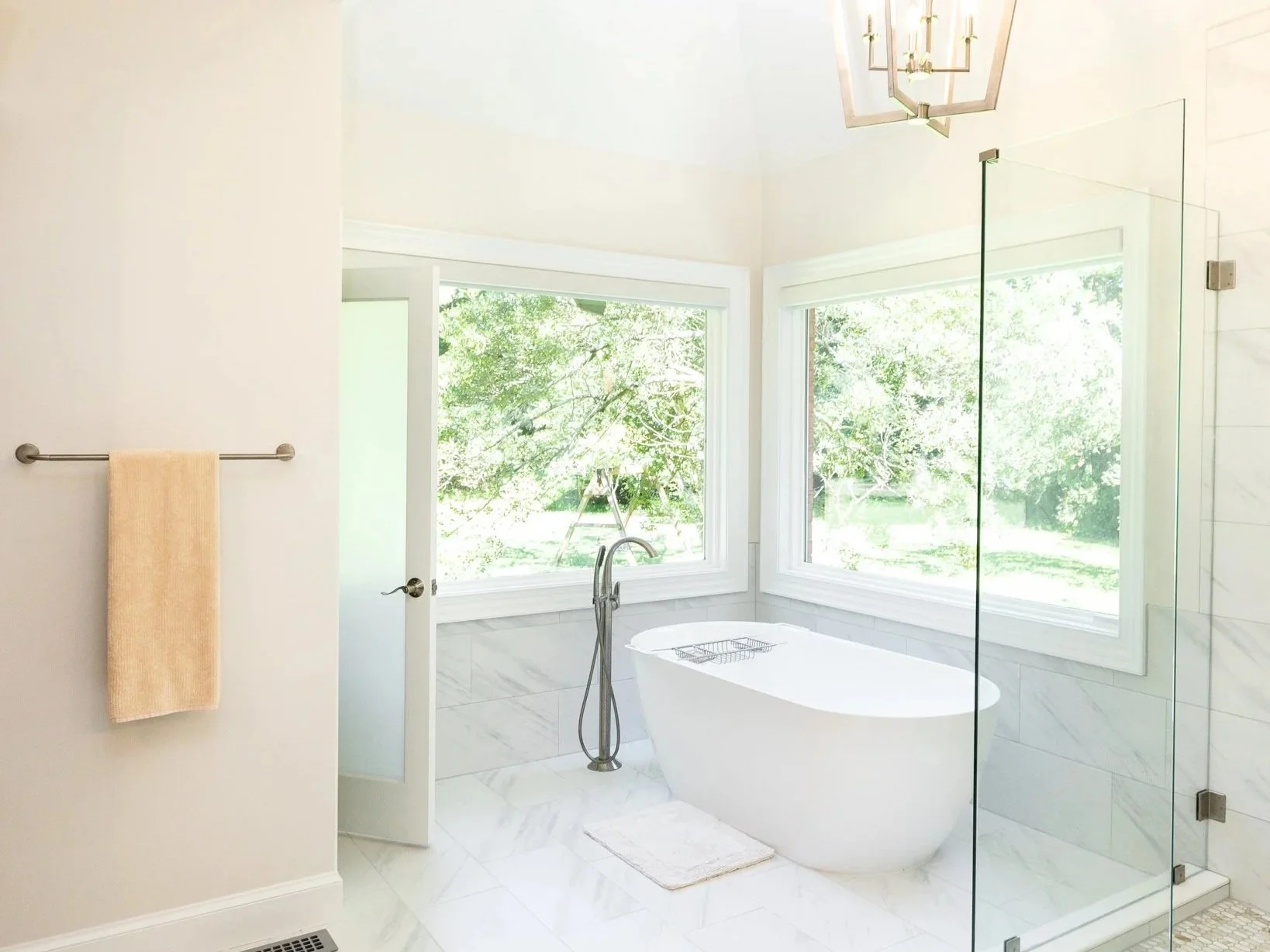
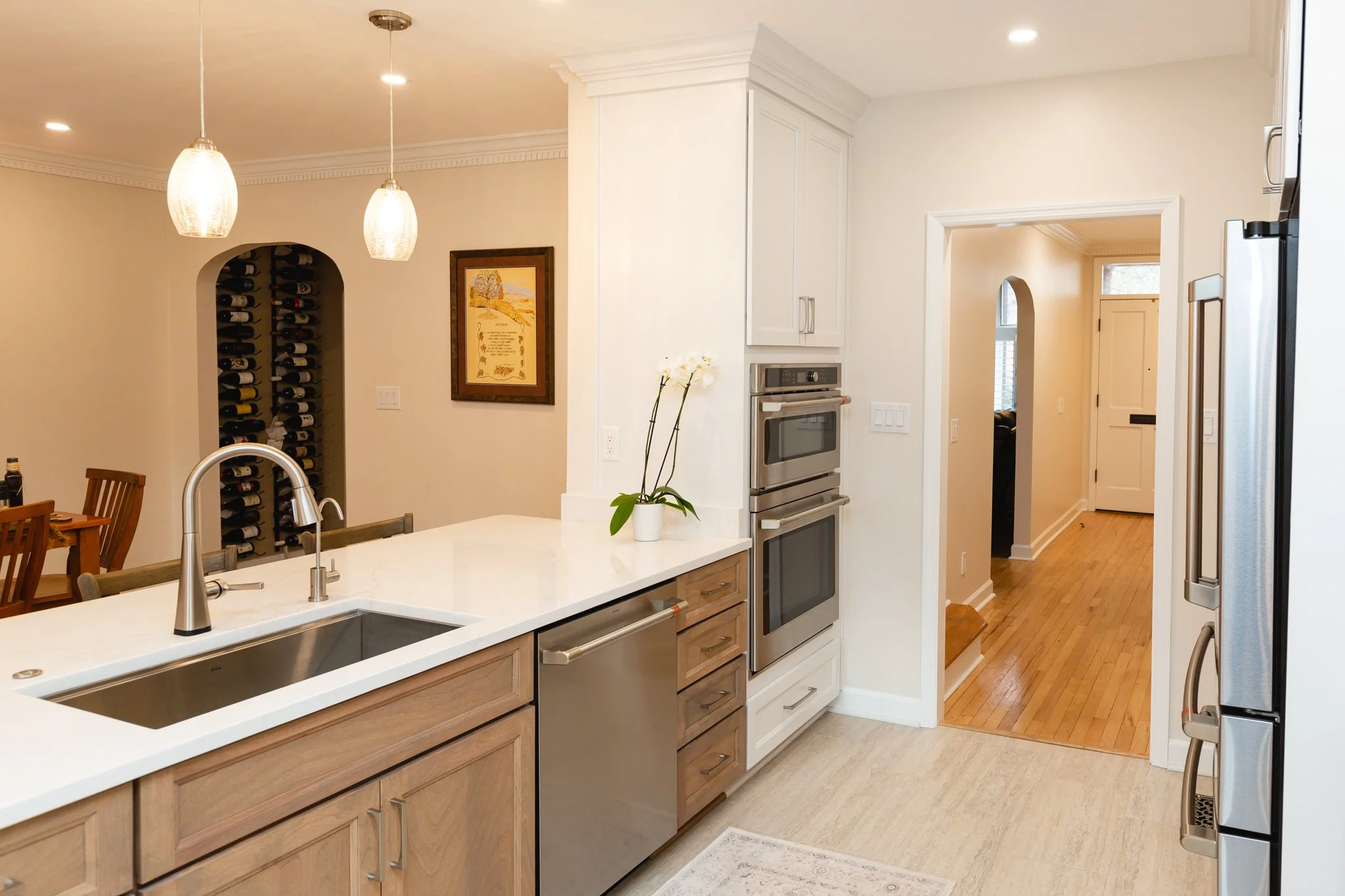
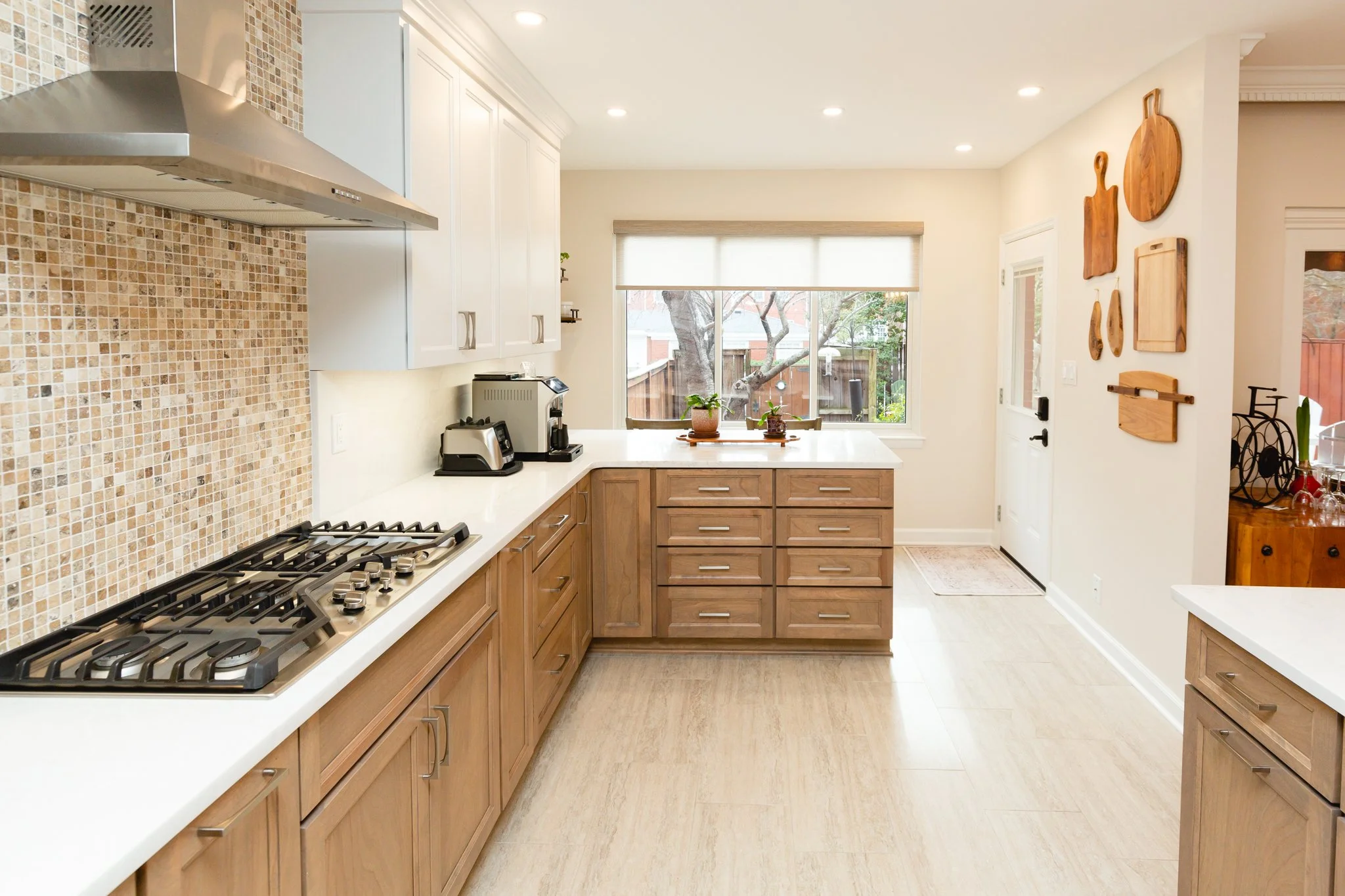
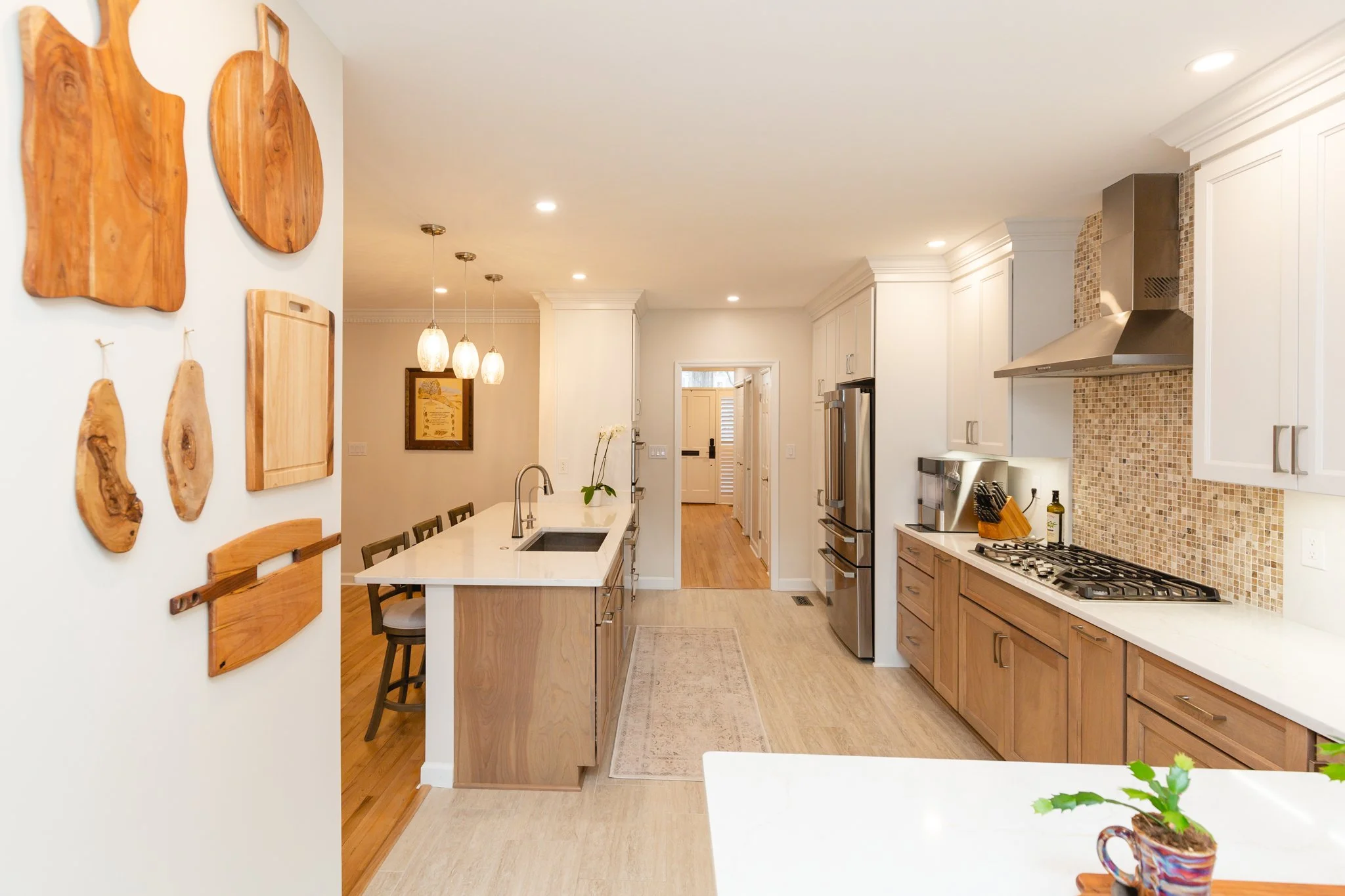
Large windows to increase both the view of the trees and the natural light.
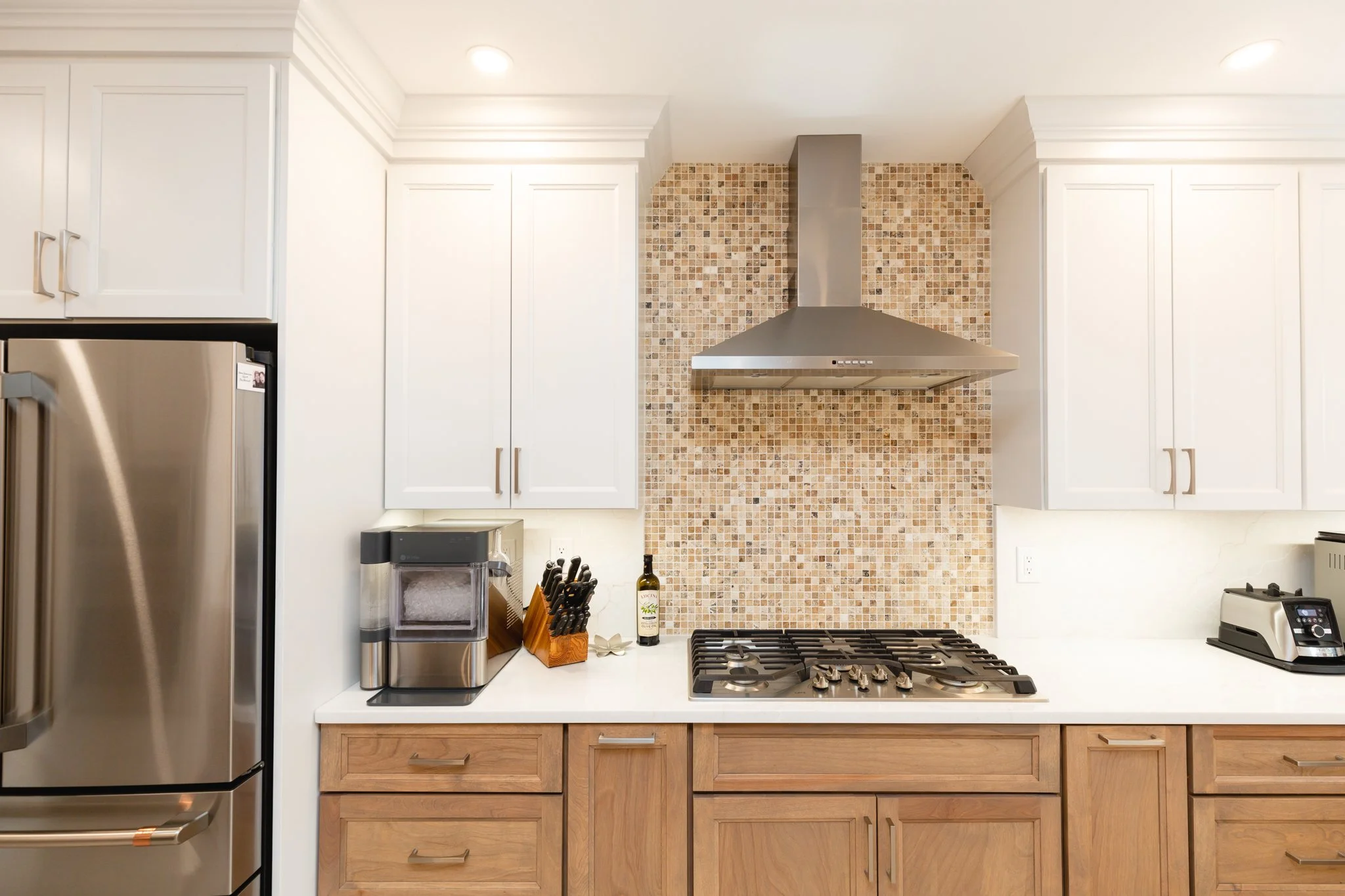
Wood cabinetry with a tumbled travertine stone backsplash feature.
The term biophilic arose in the 1970’s and amplified its presence in interior design in the last few decades, establishing its own genre. I feel that biophilic design is instinctual; we have a visceral connection with nature and inherently wish to be in its presence. As organic and sustainable materials are more readily available, the desire for more natural interiors continues to grow. Below are examples of biophilic elements, the benefits of having a biophilic environment, and ways to be more intentional with boosting nature in our interior spaces.
Types of biophilic elements
Direct / physical links to nature
Large windows for visual connection and access to fresh airflow
Greenery and flowers
Live-edge wood furnishings
Natural materials like jute, rattan, bamboo
Stone and pebbles
Indoor water features
Indirect / representative links to nature
Nature imagery and artwork
Nature inspired color palettes
Patterns from nature
Natural fibers in fabrics, like linen and cotton
Circadian lighting (lighting that follows the shift in brightness and color tone of the sun throughout the day)
General benefits
Reduced stress
Improved sleep
Better air quality
Ways to incorporate and layer these elements in your home
Hanging plants, plant stands
In households with pets, please refer to the toxic and non-toxic plant list from ASPCA linked here to know which plants are safest
Window treatments and bedding with natural fibers
Floral patterns on pillows or in artwork
Live-edge wood accent tables
Lamps with circadian lighting
A tabletop or wall mounted water feature
Bringing elements of nature into our homes adds a layer of warmth that is soothing and restorative. Nothing else can compare to the calming and grounding effect that nature has on us. Finding ways to sprinkle more of it into our lives is always a good thing.